What the spot price is
The spot price is the price for immediate delivery of a metal, quoted per ounce in US dollars. For gold, the reference that most of the trade settles against is the LBMA Gold Price. It is operated by ICE Benchmark Administration, which runs the auction platform and the methodology, while the London Bullion Market Association owns the intellectual property (LBMA Gold Price FAQs).
It is set twice a day, at 10:30 and 15:00 UK time, in US dollars. The two settings are named LBMA Gold Price AM and LBMA Gold Price PM, and contracts that reference them usually name one of the two explicitly. Prices are published in a further sixteen currencies, but the association states that these are indicative prices for settlement only, so a euro or sterling figure is not a separate benchmark.
How the number is produced
The benchmark is not a survey or an average of dealer quotes. It is an electronic auction. A chairperson sets a starting price and then a price for each round, participants enter buy and sell volumes in ounces, and the auction ends when the gap between buying and selling interest falls inside a set tolerance. That tolerance is 10,000 ounces, and any remaining imbalance is shared equally among the direct participants.
This replaced the older London Gold Fix, which ceased at the close of business on 19 March 2015; the LBMA Gold Price has run from 20 March 2015 and became a regulated benchmark on 1 April 2015. Documents that still refer to "the fix" are therefore referring to something that no longer exists, which matters when reading older valuations or wills.
Why a dealer never pays spot
Spot is a wholesale price for large, deliverable, standardised quantities. What a collector brings in is none of those things, so the quote comes with a spread. The spread covers assaying or at least checking, the dealer's own risk while the metal is in stock and the price moves, the cost of aggregating small items into a deliverable lot, and the margin.
Two practical consequences follow. First, the smaller and more varied your lot, the wider the spread: a hundred mixed silver coins cost more to process than one bar of the same weight. Second, comparing two dealers' offers only works if you convert both to the same basis, which means percentage of spot for the same weight of fine metal, not dollars per item.
Fineness, and why a gram is not a gram
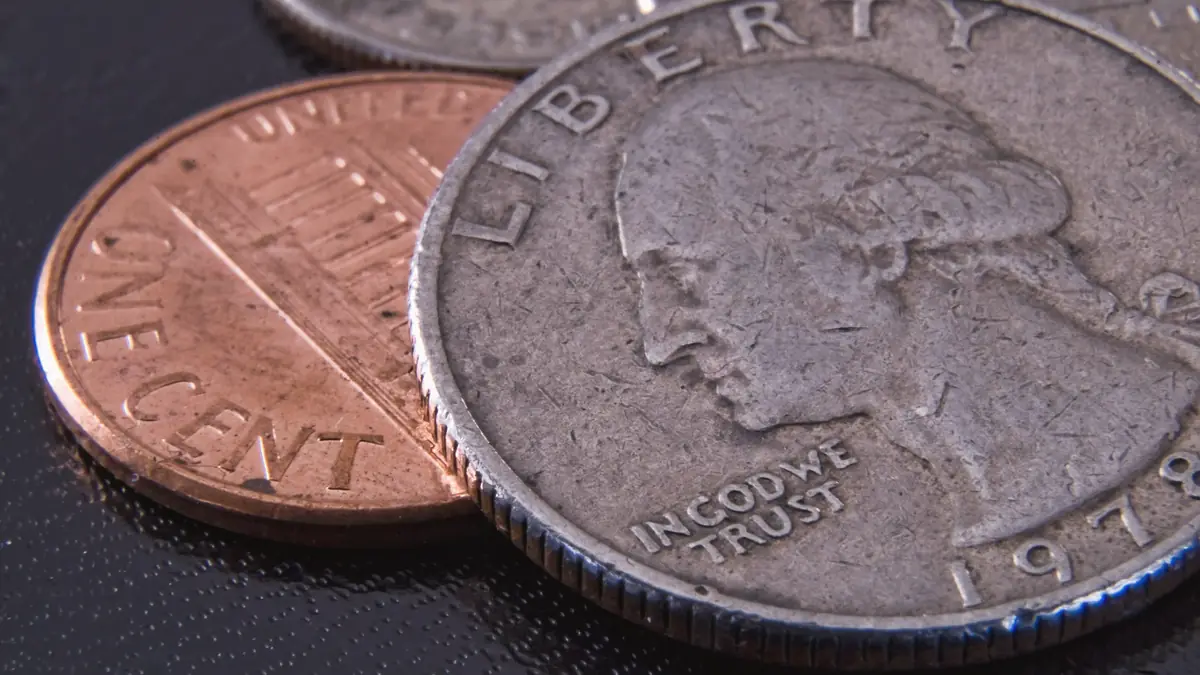
Precious metal quotes refer to fine metal, meaning the pure content, not the gross weight of the object. A jewellery item marked 14k is 14 parts gold in 24, which is 58.3 per cent, so its fine weight is a little over half its gross weight. A silver United States quarter dated 1964 or earlier is 90 per cent silver, and the clad quarter minted after that contains no silver at all beyond trace: the modern circulating quarter is 91.67 per cent copper and 8.33 per cent nickel, weighing 5.67 grams (50 State quarters, specifications).
This single distinction causes most of the disappointment at a dealer's counter. A bag of post 1964 quarters has no melt value worth discussing. A bag of pre 1965 quarters of the same size is a silver holding, and the two look nearly identical to an untrained eye.
Where to watch rates
For the benchmark itself and its publication times, the association's own prices pages are the primary source. For intraday movement, any of the major metal charting services will do, and the 24 hour chart page on this site explains how to read one without over interpreting it.
A word on timing. Watching an intraday chart rarely improves the outcome of a single small sale, because the spread a dealer applies is usually wider than a day's movement. Where the rate genuinely matters is on larger lots, and there the useful habit is to agree in advance which published setting, AM or PM and on which date, the transaction will be priced against.